

Passion: David Morley
Beethoven’s Yellowhammer by David Morley

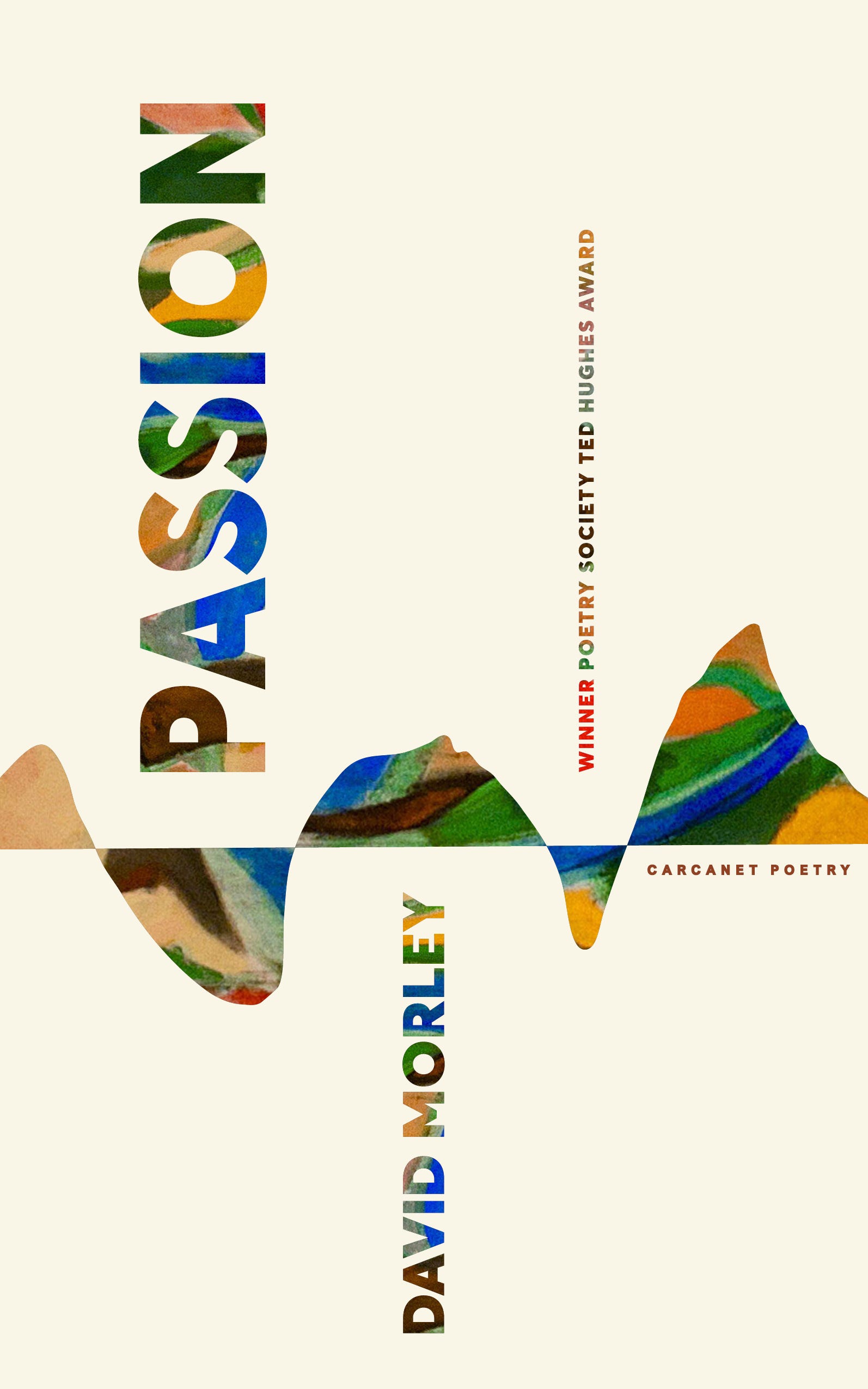
Some poems begin with a sound. A yellowhammer clings to the tree of the world, calling out its bright insistence—Yes Yes Yes Yes. The same four notes that open Beethoven’s Fifth Symphony. Writing Passion was an act of listening.
I’ve always been drawn to birds that name themselves, singing their identities into the air—the Cuckoo, the Hoopoe, The ʻŌʻō, now sadly lost to extinction. To human ears, birdsong is composition: flocks form orchestras, dawn rises in chorus, the blackbird is dusk’s artist. Mozart’s starling whistled back his music. Mahler’s cuckoos found their way into his symphonies. And Beethoven, deaf, listened with his bones—pressing a pencil between his teeth against the soundboard of his piano, feeling the music rather than hearing it.
I wrote many of these poems while walking. Walking, for me, is a kind of writing—sharpening the senses, clearing the mind. I began this book as summer waned, writing the poems in quick succession—through a season of both gifts and losses. I completed Passion and finished my first novel. And as spring arrived, my mother died.
I kept writing, as if to hold life steady in my hands. Writing allows me to look not at death, but at life—fully, in its flaws and beauty. The poems in Passion became a way of inhabiting experience, of tracing its contours. The lines on the page were like the threads of a mist-net for capturing birds—catching what passes through, holding it just long enough to understand.
A forming poem is like a clasped bird: its pulse quick but steady as you slip a ring around its leg—a vow of care. Close enough to study, yet light enough that it never panics, knowing it will lift into the sky again.
That’s why so many of my poems return to birds—to ornithology, to fieldwork. Fieldwork, in many ways, is the workshop of my poetry: observation and patience, the study of movement and sound. Ruby Topaz Hummingbirds. Skylarks slowed to syllables. Hopping-mad Choughs caught in Heligoland traps. The baby names for birds—jumplings, pufflings, eaglets, owlets, eyas. The dialect spill of names for long-tailed tits.
These poems arrived alive—bright with colour, hovering above my keyboard, insistent on their own existence.
I was listening through my bones. But I was also listening to my body—learning to trust what it was telling me. Living with heart disease, I was already attuned to its signals. Absence is only present if we let it in. Write it!—as Elizabeth Bishop says in 'One Art'. That, to me, is the essence of passion: the willingness to step into the darkness we all feel, yet many fear.
And then, during rewrites, a poem arrived out of the light. Fado—a dramatic sequence about Romany women in contemporary society—began with listening. Their voices, their melody, their rhythms settled into me. Later, at a live fado performance in Funchal, the music’s sorrow and passion struck a deep chord. I wanted these poems to carry that same weight of experience—suffering and joy held in balance, feeling shaped into song.
As the Fado poems took form, I leaned into what felt like anti-poetry, searching for a structure that honoured both Romany language and lived experience. Here, Romani moves as both record and harmony—woven alongside English, not absorbed by it. I did not write to speak for anyone, but to listen, to bear witness. The poetry is in the people.
Though I carried the shadow of my mother’s death and my illness, Passion became a space where I embraced an even more exuberant sense of language. The play and possibility within Romani felt as vital and vibrant as English—alive with movement and rhythm. I wanted to send my squads of words out like football teams, not just playing the game but dazzling with footwork—quick on the turn, improvising past defenders of convention, finding gaps in meaning and space for invention.
Several poems in Passion take the field this way, including one that transforms Edward Thomas’s incomparable paean to English words into a Romani festival of nouns and verbs. Alongside these are inventive sonnets celebrating the work of women scientists—Ada Lovelace, Anna Atkins, Mary Somerville, Caroline Herschel—visionaries whose insights reshaped our understanding of the world, yet whose brilliance has too often been overlooked.
Their work, like poetry, demands precision, attention, and the ability to see beyond the visible. These extraordinary women explored a universe where, as this book suggests, God is Salieri to Nature’s Mozart, hummingbirds hover in a theatre of flowers, pipistrelles play piccolos, swans swerve like comets, and a Zyzzyx wasp is a zugzwang of six legs and letters.
Now the page is printed. The mist-net has released its birds. And so, dear reader, that is the origin and nature of Passion.
I am still, restlessly, rewriting that novel. And I couldn’t be happier—pressing my pencil against the soundboard of language, even knowing my heart is only half whole.
This week's article, ‘Beethoven’s Yellowhammer’, is by David Morley, author of Passion, which is published this month! Remember to use the code MAYBOOKS for 10% off and free UK P&P.
On Wednesday 25th June at 7pm, please join us online to celebrate the launch of Passion! The event will be hosted by Sinéad Morrissey and will feature readings, discussion & audience Q&A. Book your ticket here.